News

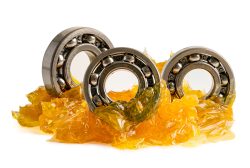
bearings with grease
A Guide to Grease Thickeners
Used for over 3000 years, grease is a key lubricant used to operate a variety of machines and bearings. Over 80% of the world’s bearings are lubricated with grease. Grease is an excellent lubricant to use when liquid lubricants fail to do the job. Greases are made of three main components: base oil (70-95%), thickener …
Read More »
What is Viscosity Index?
While researching lubricants, there are many factors to consider in selecting a lubricant: viscosity, flash point, pour point, and oxidation stability. Viscosity is the most important parameter since the viscosity grade can be the difference between optimal performance and machine breakdown. However, the ISO Viscosity Grade (VG) is determined at 40⁰C and will fluctuate depending …
Read More »
pH value scale chart
What are Lubricant Detergents?
Detergents Defined Industrial detergent additives perform two key functions. Like household detergents, the additives keep metal components clean and free of deposits. Additionally, detergents neutralize acids that form in the oil. This is key for systems where component cleanliness is essential. Originally developed for engine oils, detergents addressed carburetor deposits that could hamper performance. Detergent …
Read More »
Food & Beverage
A Guide to Food Grade Lubricants
Health, safety, and quality are of the utmost importance in the food and beverage industry. The ever-evolving standards of food and beverage safety make it important to ensure your plant is deploying the proper lubricants and cleaners. Not only do you have to meet performance standards, you also have to monitor leakage to ensure that …
Read More »
E-Waste
What is E-Waste?
Electronic waste (e-waste) is one of the fastest-growing waste streams in the world. However, according to the United Nations, only 20 percent of global e-waste is recycled each year. If that number startles you, it should.  The International Solid Waste Association believes that there needs to be a much stronger focus on e-waste, and out …
Read More »
Synthetic Coolant
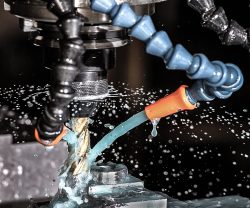
Should I Switch to Synthetic Coolants?
For your metalworking operation, you have a variety of options in selecting a coolant to use. The first decision is selecting which classification of metalworking lubricant to use. The four main classifications are: Neat Oil or Straight Oil Soluble Oil Coolant Semi-Synthetic Coolant Synthetic Coolant When selecting which fluid classification, it is important to consider: …
Read More »
Boat propellerl, gears and ropes
Case Study: Recreational and Commercial Marine Components
Products: Twin Industrial Cleaner 2458-B and Twin Soluble Rust Preventative 110 Product Types: Liquid Alkaline Cleaner and Water Soluble Rust Preventative Customer: Manufacturer of Recreational and Commercial Marine Components The Problem: The customer manufactures parts for recreational and commercial boats, but was starting to encounter rust on some of their parts after running them through …
Read More »
testing metalworking fluid formulations
How to Test Metalworking Fluid Samples
You have pondered switching your metalworking fluid. Whether it is a soluble oil, straight oil or synthetic, it is crucial to give your sample a fair test. Many times a superior product may test worse than its inferior equivalent due to a poor testing environment. There are many factors to consider when setting up the …
Read More »
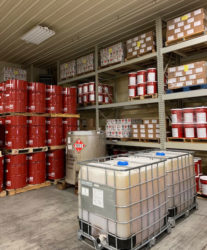
Storage of chemicals at twin specialties
Best Practices for Lubricant Storage
Lubricants are a critical component to any machine, engine, or tool. How you manage and store the lubricants is as important, if not more so than the actual lubricant selection. In controlled situations, higher quality lubricants will consistently outperform their inferior counterparts. This difference is clearly seen in comparisons of oil-based lubricants (Group I-III) and …
Read More »