
microbes cleaning oil spills
Using Microbes to Improve Spill Cleanup
What are Microbes Microbes (or microorganisms) are microscopic organisms that exist as a single cell or a colony of cells. All single-cell organisms are considered microbes. Thus, the term, microbes, is broad and encompasses a wide variety of organisms. Microbes exist in nearly every environment and can adapt to extreme conditions. Microbes are important in …
Read More »
Pros & Cons of Biodegradable Lubricants
In the next installment of our Biodegradable Lubricants series we examine the pros and cons of biodegradable lubricants. How do these lubricants compare to their petroleum-based counterparts? Previously we examined: biodegradability standards, biodegradable base stocks and biodegradable lubricant products. However, are these products right for you? We will look at some pros and cons to …
Read More »
Moly_Grease
What is Moly?
Molybdenum Disulfide, simply known as Moly, is used both independently as a dry lubricant and as an additive in lubricating greases. Dry lubricants reduce friction between two sliding surfaces without the need for an oil medium. Dry lubricant molecules have a natural attraction to metal and adhere themselves to metal surfaces. These molecules create a …
Read More »
What are Biodegradable Lubricants?
As the world’s petroleum reserves are extracted, scarcity increases, thus driving oil and lubricant prices higher. This economic burden will force end-users and manufacturers to develop alternatives that are cost effective, readily available, and sustainable. The answer to these concerns are biodegradable lubricants. Biodegradable Lubricants Defined Biodegradable lubricants have the ability to degrade naturally by …
Read More »
aerospace lubricants
What are Aerospace Lubricants?
On May 30, 2020, NASA and SpaceX partnered to send American astronauts from US soil to the International Space Station for the first time since 2011. As a new era spaceflight begins, government entities like NASA and private enterprises like SpaceX will work to innovate their rockets and push boundaries for human space flight. Lubricant …
Read More »
Friction_Modifiers
What are Friction Modifiers?
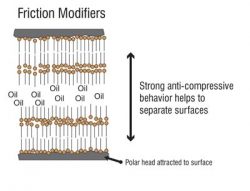
Friction modifiers are mild anti-wear additives used to minimize light surface contact, such as sliding and rolling. These can also be referred to as boundary lubrication additives. These additives are used in lubricants to modify the coefficient of friction (hence the name, Friction Modifiers). Friction modifiers are deployed to prevent wear on metal surfaces. Mostly …
Read More »
base oil resized
How Mineral Base Oils are Made
Oil-based liquid lubricants are composed of two (2) key ingredients: base oil and additive packages. Additive packages in a lubricant will tend to vary based on applications. This post will focus on the main ingredient, base oils. Base oils will comprise typically 80-99% of an oil-based lubricant. Before we look at the base oil in …
Read More »
bearings with grease
A Guide to Grease Thickeners
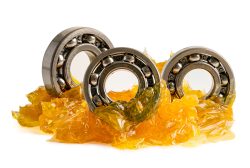
Used for over 3000 years, grease is a key lubricant used to operate a variety of machines and bearings. Over 80% of the world’s bearings are lubricated with grease. Grease is an excellent lubricant to use when liquid lubricants fail to do the job. Greases are made of three main components: base oil (70-95%), thickener …
Read More »
What is Viscosity Index?
While researching lubricants, there are many factors to consider in selecting a lubricant: viscosity, flash point, pour point, and oxidation stability. Viscosity is the most important parameter since the viscosity grade can be the difference between optimal performance and machine breakdown. However, the ISO Viscosity Grade (VG) is determined at 40⁰C and will fluctuate depending …
Read More »
pH value scale chart
What are Lubricant Detergents?
Detergents Defined Industrial detergent additives perform two key functions. Like household detergents, the additives keep metal components clean and free of deposits. Additionally, detergents neutralize acids that form in the oil. This is key for systems where component cleanliness is essential. Originally developed for engine oils, detergents addressed carburetor deposits that could hamper performance. Detergent …
Read More »
Food & Beverage
A Guide to Food Grade Lubricants
Health, safety, and quality are of the utmost importance in the food and beverage industry. The ever-evolving standards of food and beverage safety make it important to ensure your plant is deploying the proper lubricants and cleaners. Not only do you have to meet performance standards, you also have to monitor leakage to ensure that …
Read More »
Synthetic Coolant
Should I Switch to Synthetic Coolants?
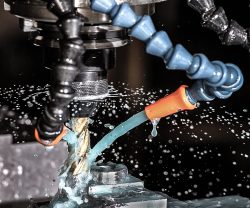
For your metalworking operation, you have a variety of options in selecting a coolant to use. The first decision is selecting which classification of metalworking lubricant to use. The four main classifications are: Neat Oil or Straight Oil Soluble Oil Coolant Semi-Synthetic Coolant Synthetic Coolant When selecting which fluid classification, it is important to consider: …
Read More »